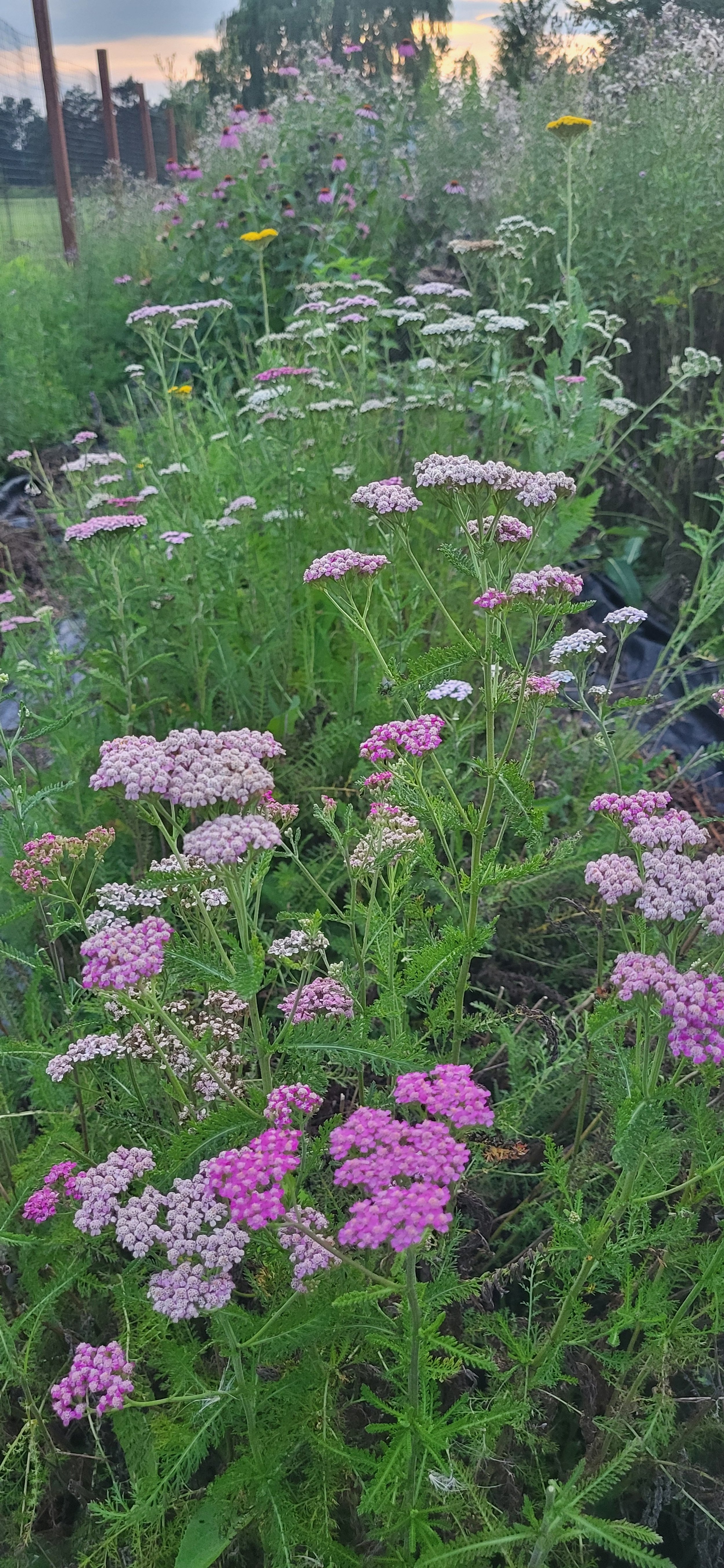
Yarrow
We initially added Yarrow to our garden when we learned about its wound healing properties. It was commonly used by soldiers in combat from the time of Ancient Greeks through the early 20th century. We first put this plant to the test when one of our Golden Laced Polish Hens got hit by a car. Her wing was badly bleeding. We were worried that the other chickens would pick on her once they saw all the blood. After applying a yarrow poultice to her wing, we saw the benefits of this plant first hand. The blood was clotted and the green paste from the poultice masked the red color which allowed her to be among the other chickens without getting picked on. I'm happy to report that her wing healed and she survived! Another animal incident occurred when my peahen, Penelope, got attacked by a fox. She was bleeding from her neck and had a huge gash under her wing. We thought she was a goner for sure, but I generously applied the Cuts & Scrapes Slave all over her injured areas. She hid under the porch for 4 hours, but survived and is still alive on our farm today. Yarrow has been an essential plant on our property from healing animal wounds, castrating pigs, to patching up cuts and scrapes and bloody noses on our family. Even though we mainly use this plant externally, there are so many beneficial effects internally as well. Yarrow is a fever breaker, aromatic bitter, blood mover, and useful for lower urinary tract infections. This herb can have opposite effects as needed. For example, yarrow can stimulate menstruation, slow blood loss from wounds, and stimulates contractions, but manages to relax the uterus to ease painful cramping, and to prevent excessive bleeding--all at the same time!Latin Name: Achillea millefolium
Botanical Name: Asteraceae
Actions: Anti-inflammatory, Antimicrobial, Antispasmodic, Astringent, Choleretic, Diaphoretic, Diuretic, Emmenagogue, Styptic, Vulnerary
Safety: Do not use during pregnancy. May cause hypersensitivity in those allergic to plants in the Asteraceae (Daisy) family.